Wednesday, January 22, 2014

Am I an antisemite when I criticize Israel?


"Some openly call Israel an apartheid state. This is the face of the new anti-Semitism. It targets the Jewish people by targeting Israel and attempts to make the old bigotry acceptable for a new generation" -- Prime Minister Stephen Harper of Canada speaking to the Israeli Knesset, January 20, 2014.

Antisemitism is very real, yet when I listened to Harper's address, I was shocked to hear him dismiss any criticism of Israel as antisemitism (I prefer the unhyphenated form). His pro-Israel stance is well-known, but to associate such criticism with antisemitism is unacceptable to me and countless others around the world.

While Harper was roundly applauded by most members of the Knesset, two Arab representatives walked out in protest. But he did not come to Israel to ingratiate himself with the Arabs and Palestinians, whom he had promised $66 million earlier in the day. He was there to demonstrate his continuing support for Israel.

Harper, accompanied by a delegation of about 200 cabinet ministers, businessmen, religious leaders, and staff, most of whom had their expenses paid for courtesy of Canadian taxpayers.

Harper showed his solidarity with the Israeli people, as he explained in his speech to the Knesset:

"It is a Canadian tradition to stand for what is principled and just, regardless of whether it is convenient or popular. Support today for the Jewish State of Israel is more than a moral imperative. It is also of strategic importance, also a matter of our own, long-term interests."


Harper's motivation is not only political -- to get the Jewish vote in Canada -- which has often gone to other political parties in past elections, but ideological. Harper and Prime Minister Benjamin Netanyahu of Israel are close friends who share similar world views, at least on many political issues.

The other main political parties in Canada, the Liberals and the NDP, also clearly support Israel. Indeed, that has been the official policy of the Canadian government for decades. While there are some differences on the Palestinian question and the matter of Israeli settlements, there is full agreement on the right of Israel to exist, especially in the face of the hostility of some Arab nations who refuse to acknowledge that right.

In his speech Harper evidenced nothing but public praise for Israel:

"Neither Israel’s existence nor its policies are responsible for the instability in the Middle East today. Israel is the only country in the Middle East, which has long anchored itself in the ideals of freedom, democracy and the rule of law."

Thus Harper concluded by promising Canada's unwavering support; a support that contrasts sharply with the criticism that Israel constantly receives from many European nations: "Through fire and water, Canada will stand with you."

What does Harper mean by the term antisemitism? Scholars have disputed this term for a long time. But I understand him to mean public criticism of Israel. In a press conference, it became clear that the two prime ministers were not in full agreement on the issue of settlements. Netanyahu admitted as much, even though Harper would not acknowledge it at all. 


Any differences between the two leaders were aired in private, which is the way Harper prefers to deal with friends. Thus he is opposed any critical actions or statements in public. He explained further in his speech: 

"As once Jewish businesses were boycotted, some civil-society leaders today call for a boycott of Israel. On some campuses, intellectualized arguments against Israeli policies thinly mask the underlying realities, such as the shunning of Israeli academics and the harassment of Jewish students."

By avoiding any public criticism of Israel, Harper may be the perfect guest, but he is also being disingenuous. He is not only a consummate politician but he unwittingly reveals his strong ideological bias as well. 

Aside from the political and economic aspects of his ideological program, where he wants to gain votes and promote better trade between Canada and Israel, as is evidenced by the assortment of businessmen he took with him, he took along an assortment of rabbis and a large dose of evangelical preachers.

Both the rabbis and preachers were popular in Israel. None of them are antisemites by any stretch of the imagination. They were carefully selected as Zionists in orientation. Perhaps as Zionist as Harper himself, who is more Zionist than many Israelis.


Anyone who is at all critical of Israel would never have received an invitation from the Office of the Prime Minister. That is sad, because this way ordinary Israelis are denied the opportunity to see Canadians whose views differ from those of .Harper.

Speaking personally, I am critical of Israel, as I have made very clear in several posts in the last few years. Such criticism, however, does not make me an antisemite. I probably understand the Israeli-Palestinian conflict better than many Canadians, and for this reason I am prepared to blame both sides when necessary and appropriate. I have tried to be balanced, but there are times when Israel needs to be criticized. 

Prime Minister Harper represents the government. I am only a private citizen, who is largely unknown in Canada and even more so in Israel. Therefore I can speak more boldly that can Harper, but he should not accuse me, or anyone else for that matter, of antisemitism when this happens.

Such a broad definition of antisemitism is not helpful. It stops any further discussion. If Harper only wants to take along people who agree with his public stand on Israel that is his business. I am not offended in the least that he did not invite me. After all, who am I? In fact, I probably would not have accepted the invitation.

I am very concerned when a fellow Christian -- Harper is an evangelical Christian, even though he does not advertise the fact very much -- takes a position on Israel that is diametrically opposed to my own. Indeed, as is evident from many other policies that he espouses, we are at least in politics polar opposites. Since he is the prime minister, however, only his views matter on the world stage. I have only this blog to voice mine.


Supposedly as Christians we should share many elements of our world views, but I doubt that is the case here. Harper has more in common with Netanyahu than he has with me. He probably has even more in common with the evangelical preachers he took with him.

That is fine with me. It just proves that there is more than one world view that can be labelled Christian. It is unfortunate that the world only saw the one that Harper and his entourage displayed during the tour of Israel.

How about those of us who seek justice not only for the Israelis, who need a homeland but are threatened by their neighbors, but also for the Palestinians whose land is slowly but steadily being stolen from them by means of Israeli government edicts? Am I an antisemite when I mention the cause of these Palestinians? 

Am I therefore unaware of the threat that Israel faces from its Arab neighbors? No, I am very much aware of the dire needs of the Israelis. But I am also conscious of what Israelis have done to the Palestinian people and continue to do.

Please, Mr. Harper, stop branding all those who are at all critical of Israel as antisemites, especially if you do so to earn cheap browning points with the Israelis. I have never liked your politics, and now I like them even less. You may be popular in Israel, but the rest of the world thinks otherwise. Your attitude to Israel, need I remind you, is why Canada was denied a non-permanent seat on the UN Security Council in 2010. 

You have made me ashamed to be a Canadian. When you speak on behalf of Canada, you may think you represent all Canadians, but there are many Canadians who disagree with you. I know I do. I will continue to criticize Israel even at the risk of you labeling me an antisemite.
          

Tuesday, January 21, 2014

Feeding the hungry not the obese

        I was hungry and you fed me. 
        I was thirsty and you gave me a drink.
        I was homeless and you gave me a room.
        I was shivering and you gave me clothes.
        I was sick and you stopped to visit.
        I was in prison and you came to me.
            (Matthew 25:35 -- The Message)

An article in The Toronto Star the other day informed me that four years after the earthquake in Haiti many people are still suffering from hunger in spite of all the aid that has flooded into that devastated country.

From another source I learned that the US has the highest obesity rate of 22 industrialized countries in the world. I find it difficult to put these facts together. How is this possible?

But these facts have prompted me to reflect on them in this post and to try to make some sense out of them.

Let us look at some facts and statistics, starting with hunger: About 13.1 percent of the world’s population is hungry every day. That is roughly 925 million people who are undernourished, meaning they consume less than 2,100 calories on a daily basis. Yet the world produces enough food to feed all 7.1 billion who live on it.

Poverty is the main cause of hunger; hunger in turn is a cause of poverty. When people are malnourished, they lose the mental resources to be productive members of society. When a mother is undernourished during pregnancy, the baby is often born undernourished as well.

Nearly 98 percent of worldwide hunger exists in underdeveloped countries. And hunger is often passed from mother to child. Each year, 17 million children are born underweight because their mothers are malnourished.
Almost 1 in every 15 children in developing countries dies from hunger. More than 20,000 children die every day from hunger.


The total number of hungry people in the world is slowly dropping, but there is still a long way to go. Even one hunger-related death, however, is one death too many.

Hunger has been defined as the want or scarcity of food whether in a country or the world. The related term, malnutrition, refers to the lack of some or all nutritional elements necessary for human health, whether that is proteins or micronutrients such as vitamins and minerals.

The world produces enough food to feed everyone. No one needs to go hungry or suffer from malnutrition. There is enough to provide everyone in the world with at least 2,720 calories per day. In spite of a 70 per cent increase in the world population in the last 30 years, the world produces 17 percent more calories per person. The principal problem is that many people in the world do not have enough land to grow, or income to purchase, enough food. 

There are many reasons why people go hungry. Poverty is only one. The underlying cause of hunger and poverty is the economic and political systems of the world.  The control over resources and income is based on military, political and economic power that typically ends up in the hands of a minority who live very well, while those at the bottom barely survive, if they do.

Climate change is increasingly viewed as a cause of hunger and poverty. Increasing drought, flooding, and changing climatic patterns require a shift in crops and farming practices that may not be easily accomplished, especially in parts of the world where traditional farming methods are the only ones people know.

Conflict is another cause of hunger. In Syria millions have been forced into poverty and hunger because of the ongoing civil war. The same thing has happened in other conflict zones. That alone would be a good reason to end all wars.


Next a definition of obesity: an obese person is one with a body mass index (BMI) over 30 kg/m2.
BMI is defined as the weight in kilograms divided by the square of the height in meters (kg/m2). Globally, there are more than 1 billion overweight adults, at least 300 million of them clinically obese.

Obesity rates that have risen three-fold or more since 1980 in some areas of North America, the United Kingdom, Eastern Europe, the Middle East, the Pacific Islands, Australasia and China. Economic growth, modernization, urbanization and globalization of food markets are just some of the forces thought to underlie the epidemic.  Two-thirds of Americans over age 20 are overweight and nearly one-third of them are obese.

Overweight and obesity lead to adverse metabolic effects on blood pressure, cholesterol, triglycerides and insulin resistance. Approximately 85% of people with diabetes are type 2, and of these, 90% are obese or overweight. A raised BMI also increases the risks of cancer of the breast, colon, prostate, endometroium, kidney and gallbladder.

A combination of excessive food intake and a lack of physical activity explains most cases of obesity, but only a few cases are due to genetics, medical reasons, or  psychiatric illness. The increasing rates of obesity in the world are due to diet, and the increased reliance on cars.

A recent study in Toronto showed a high correlation between obesity rates and mobility. People who lived in neighborhoods where they could easily walk to stores and services had lower obesity rates than those who needed to use cars to get around. The map below illustrates which areas in Toronto are the most walkable and which the least. Not surprisingly, the urban core is the most walkable.


Other studies have shown that obesity is closely related to the amount of time spent in front of the TV. Again, the issue of mobility, or the lack thereof, contributes to obesity. Most Africans and Asians walk everywhere and are very active when they work, in contrast to many Europeans and North Americans.

In terms of diet, Americans in 2003 consumed 3,754 per person. While during roughly the same period Europeans used 3,394 calories; in the developing areas of Asia, 2,648 calories; and in sub-Saharan Africa people had 2,176 calories per person, which is at the bottom end of the recommended food intake.

Total calorie consumption was found to be closely related to obesity, which is not surprising when Americans consume nearly twice as many calories as most Africans. Yet even in Africa the obesity rate is growing as people become wealthier and can buy more food. 


In my travels in Africa I discovered more and more fast food outlets. Many of these outlets are indigenous, but that does not make them better than the multinationals.

Because of the high calorie consumption elsewhere in the world, obesity is seen as a sign of wealth and well-being in many parts of Africa. Similarly, in Asia wealth and obesity and often associated, so much so that in many Filipino languages the same word.is used for both. To say someone is fat is therefore a compliment.
Feeding the hungry is a biblical command, but we must do so not just because God commands us to do that. We must do so out of love for our neighbor, whether that neighbor lives nearby or far away. It is a tragedy that four years after the earthquake in Haiti many people are still hungry there. There is no excuse for that! Not after all the aid that has flooded that country. 

There is enough food produced in the world to provide adequate nourishment to every person on this globe. Instead, the richest countries use unproductive methods to grow food and they waste much of it. Moreover, they eat the wrong types of food -- food that make them obese. 


Let us stop feeding the obese and instead feed the hungry! 

Remember, we are God's hands and feet. He uses us to feed those who are hungry in this world.

Jesus threatens those who refuse to feed the hungry with eternal punishment, but he also promises to bless those who provide for those in need. I realize that it is difficult to legislate good eating habits and sufficient exercise, but if we, as Europeans and North Americans, do not change our lifestyles, not only will we suffer from obesity-related diseases but we will also condemn many more people in the underdeveloped countries to a lifetime of malnourishment and to an early death.

 Is that what you wish to happen? Probably not! Let us each begin by changing our own lifestyles. I try to walk 3 - 5 km per day. Let us also try to eat better foods. 

Cooking with freshly prepared ingredients was something our family learned in the Philippines and in Africa. Slow food, not fast food, is our preference. I hope it is yours as well.


I also invite you to share your surplus food with those in need. That can be done most efficiently through NGOs that have the ability to distribute food where needed. In addition, governments should be encouraged to assist by providing matching grants to these NGOs. Canada has done this in many crises.

Sad to say, these efforts were not enough in Haiti. Greed and corruption prevented that. May God punish those who commit such crimes against humanity!

But most important governments should promote better more active lifestyles. There is, of course, much more that governments can through legislation to reduce obesity. The savings will be enormous!

So get off your fanny and start walking, jogging, or whatever other form of exercise you prefer. You will be healthier as a result. But keep the hungry of the world in mind while you are doing this. Make sure they get something to eat. 

Is that too much to ask? I could write a lot more, but this is all that my blog permits, since this post is already too long. God invites us to share what he has so abundantly provided us with. We are stewards, after all, of God's creation. Let us take good care of it and share it. 

This includes taking care of our bodies. It also includes making it possible for who are hungry get something to eat.  "I was hungry and you fed me." 
      

Monday, January 13, 2014

Do some human rights trump others?


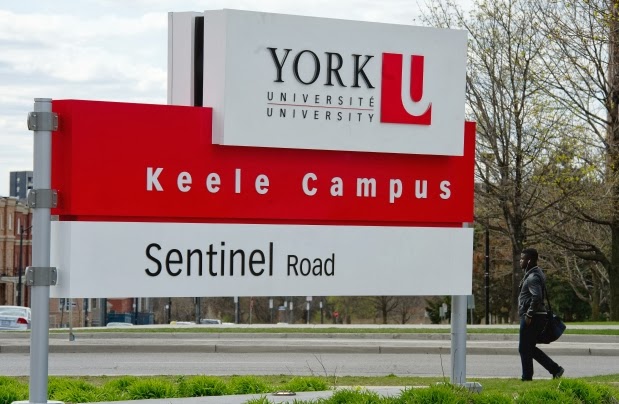
Do some human rights trump others? This is an age-old question, but it has come to the fore again with a few incidents that were reported in the media recently. One occurred at York University in Toronto while another was mentioned in an ethics column in The Toronto Star.

These are only a few examples. I am sure you can think of many more. Yet it is worthwhile to briefly enter into this controversy because of the important issues that are raised about the nature of human rights.

The incident at York was prompted by a male student who was taking an online course that required one face-to-face meeting with some other students some of whom were female. The student requested not to meet these other students because of religious reasons. He claimed that his religion did not permit him to be in the same room with these women. For privacy reasons the man's religion was not reported in the media.

The professor sent the request to the university administration, which then instructed him to accommodate the student's request. The professor, however, refused to do so, and other professors in his department agreed with him. The student later completed the assignment anyway by meeting group, including the women.

The incident could have ended there, but some members of the media and the general public condemned the university for what they perceived as a blatant disregard for woman's rights. The university should never have accommodated the student's request, which they saw as personal and had nothing to do with his religion.


The university in defending its action stated that every case is considered individually on its own merit. York University has a long history of accommodating religious groups on campus. Jewish students, who make up a large percentage of the student body, were given several days off every year to celebrate their religious high holidays.

Not surprisingly, when other religious groups learned about this, they asked for the same privilege. At that point, York declared a "fall reading week" to make it seem that they were not showing preference to Jews.

After the case of the student became public a petition was started to “tell York University that sexual and gender discrimination based on personal religious beliefs must not be condoned in universities and other public institutions.”

The action of the university is widely perceived as discrimination against women. The counter-argument that female students would not be discriminated against as long as they were not aware of it was dismissed by many people, who contend that by implication, it is ok not to interact with women. The accommodation in this case does affect others, they contend.

York’s provost affirmed that the university is “committed to gender equity, inclusivity and diversity” and explained further that “the broader issue of religious accommodations in secular universities remains an important societal concern that warrants further discussion. It is noteworthy that the Ontario Human Rights Commission is currently reviewing these matters.”


One person wrote in response to the university's decision to accommodate the student: "Women’s right to not be segregated is what is at issue. This right was hard won, must come first over any so-called or real religious conviction." Another wrote: "How is this religious freedom? Disrespecting women is (an) outrage, especially in the 21st Century."

Yet another writer provided some much-needed balance:  "This is a tough issue. I would still defend the student’s right to request religious accommodation and he should be heard. It’s no different than the women-only swim classes at U of T and groups where girls have to sit behind the boys. Each case deserves to be heard, even if we disagree."

The York University case has been blown out of all proportion because of media involvement, yet it does raise some important issues. Popular opinion is clearly on the side of women's rights. That is understandable. 

Women's rights are crucial, especially at a university where the majority of the students are women. York does not want to diminish their hand-won rights, but it also wants to respect religious rights. It does not want to set up a hierarchy of rights so that some human rights trump others, but that is difficult to avoid.

Some commentators, especially members of the media, state that women's right should precedence over religious rights, which they perceive as personal or private. But, as I have written many times in this blog, religious rights should not be regarded as private any more than any other human rights are. Nor should any right trump any other right except on a case to case basis. No right is absolute and inherently superior to other rights.


The student in the York case, at his professor's urging, finally did meet with the female students in his group. The case should have ended then and there, except the media became involved and escalated the issue by turning it into an instance where women's rights trump all religious rights.

Even if the student involved had refused to meet with the women for personal reasons, these reasons should have been considered, e.g. that he was somehow embarrassed being with women. Instead, he claimed that he did this for religious reasons. These should not be immediately dismissed as personal. 

Since his religion was not revealed, we are handicapped by that lack of knowledge. In this case, in fairness to the student, let us assume that his religion indeed forbids such contact. Then his refusal should be honored or at least listened to. This is what the university administration tried to do.

Similarly, if students, regardless of gender, had refused to meet with a group because of their race or sexual orientation but claimed religious and not personal reasons for doing so, we would all no doubt disagree and, like the professor at York, we would try to persuade them to change their position. Whether the university would accommodate them in such a case is dubious. Race and sexual orientation trump everything, it seems.


However, when women's rights and sexual orientation conflict with each other, it can get complex indeed. The latter can trump the former. This is what another example, taken from an ethics column, illustrates.

A woman complained that a transsexual had used the women's changing room while she was there, even though he was still obviously a male. In fact, he proudly displayed an erection. The columnist responded by stating that the transsexual had the full right to be there. He emphasized that the law declares this right to be an absolute one: as long as he claims to be a transsexual, he would not be arrested.

Even if the columnist is right about the law in this case, most of us would share the woman's discomfort. Sexual orientation trumps women's rights in this instance, although it may not always do so. Race can also trump women's rights at times. It is difficult to develop an hierarchy of human rights, nor should we do so.

These examples are not intended to demean the rights of any group. But they do demonstrate that some rights are more important at times than other rights. Religious rights, however, are limited as compared to many others. Whether we think that that is fair or not depends very much on what groups we belong to and how much we have been secularized.

No doubt you can think up many more examples. Human rights are basic to all of us. We all possess these rights, but sometimes they conflict. Then the debates begin, debates that are not easily resolved, nor to the satisfaction of everyone.
        

Wednesday, January 8, 2014

How can we have global warming when it is freezing outside?


Major parts of the US and Canada are experiencing freezing weather right now as I am writing this. Some areas of the US are recording record cold temperatures. Even in Canada, which is used to cold weather, records are being broken. This is only January, but Canadians are already fed up with winter. This leaves the question: How can we have global warming when it is freezing outside?

More locally, the main international airport in Toronto was shut down for all flights for eight hours due to the extreme cold snap. Planes were stuck on the tarmac and it was bedlam in the terminals, as people who were returning from trips abroad had to wait for a gate to open so they could get off their plane and then had to try to find their luggage, while others had to wait hours and even days to leave on their flight.

The culprit for these extremely cold temperatures is the "polar vortex," a mass of arctic air that followed the jet stream when it veered south and covered much of central and eastern North America. Canadians were probably relieved that Canada as not mentioned this time as the source of all that cold air. Instead, the "polar vortex" received the blame. Now Americans could talk about the "polar vortex" rather than Canada.

Humor aside, everyone who faced this arctic blast will have wondered about the reality of global warming. Yet even climate change deniers should be careful not rub snow into the faces of all those who are warning against global warming. Global warming is real, as I have written about many times (see especially an earlier post).

Australia is currently suffering from extreme heat. While parts of North America are freezing, Alaska and the Scandinavian countries are unusually warm. Both record cold and record heat are effects of global warming.

Frozen Chicago

In Canada, Conservative Member of Parliament Peter Braid stated publicly on the radio that recent extreme weather and climate change are closely connected: "With climate change comes extreme weather events. We saw that through the floods in southern Alberta, we’re now seeing that with the ice storms in Kitchener-Waterloo and Toronto, with the extreme cold across the country."

That a Conservative MP would admit that is very surprising, The Conservatives have a poor record when it comes to climate change, and thus Braid's comment is a hopeful sign that some back benchers are willing to speak out and contradict the party line in spite of the tight control of caucus that the Prime Minister maintains.

Such extremes are one result of global warming. There is a rise in average global temperatures, but this rise cannot be measured in days or weeks, let alone months or years, but in decades and sometimes centuries. Global warming is slow but inexorable, unless we as human beings do something to stem the tide.

Some global warming is due to natural causes, but human beings have contributed greatly -- more than many people are willing to admit. The problem is not just carbon dioxide emissions but other gases such as methane, which is produced by cows. Methane is natural, but these cows are intended for milk and meat that is used for human consumption. Without humans much of the methane from cows would not be produced.


I get very upset when people who are religious and claim to be stewards of God's creation, yet they deny the human factor in global warming. The extreme cold weather in North America does not turn global warming into a myth.

Extreme temperatures are changing over time, according to climatologists. In North America over the past decade, the all-time records for warm weather have been broken at twice the rate as records for cold.

This extreme winter weather North America is experiencing is likely due to the Arctic’s rapidly disappearing ice, according to Jennifer Francis, a researcher at the Institute of Marine and Coastal Sciences at Rutgers University.

The loss of ice leaves behind warmer open water that is much less reflective to incoming sunlight than ice is. That is one reason why the northern polar region is warming at a faster rate than the rest of the hemisphere.
This in turn impacts the behavior of the jet stream which leads to more frequent extreme weather. 


Francis says this warming causes the west-to-east jet stream to become weaker and when that happens, it takes a wavy path. When an exceptionally wavy jet stream pattern occurs in the middle of the winter, it means cold air will likely get sucked southward.

She adds that it is hard to say if this weird weather is directly related to global warming, but the jet stream seems to be taking on this wavy type of pattern more often. Any weather pattern this is happening now is different from what it used to be. Thus, according to her, global warming can make cold snaps even worse.

The Intergovernmental Panel on Climate Change, which released its fifth assessment report last September, pointed toward a global trend of warmer temperatures but did not exclude sporadic cold-weather extremes. The report warned there will be more extreme weather events. Among other things, we will likely experience stronger hurricanes, longer heat waves and, in some parts of the world, more snow and hail than before.

While parts of North America are being walloped by snow, other parts are experiencing different weather: Alaska is warm and the US West Coast is experiencing a prolonged drought. Elsewhere, England is being pummeled by rainstorms and Scandinavia enjoying very warm weather.


Francis explains that all these extreme events are related to the way the jet stream is shaped right now with big north and south swings. Not surprisingly, the people in Alaska and Scandinavia are not questioning global warming.

That is as good an explanation we are going to get for the strange weather that we have been experiencing in North America lately. The cold snap will not last very long. By the time you read this, it may be long past. But another cold snap might be right around the corner. Who knows!

This has been a strange winter thus far in Toronto. In December, Toronto had an ice storm that left parts of the city and surrounding municipalities without power and heat. Now this cold snap. What is in store next for Toronto? I will not hazard a guess. What I do know is this: global warming is real. 
     

Saturday, January 4, 2014

Prospects for 2014


What does this new year hold in store for us? None of us knows. Every year The Economist publishes its list of predictions before the year begins. Some of them come to pass, some not at all, and some only in part. These are intelligent guesses by guest authors and the editors. For example, for 2013 they foresaw that Pope Benedict would experience difficulties but did not predict his resignation and replacement by Pope Francis.

Because prophecy is such a hazardous occupation, I will refrain from making my own predictions for 2014. I can, however, assert the prospect of certain things happening in this new year. First of all, using the words of a very wise man, say that there is "a time to be born and a time to die." I can say this without fear of contradiction, All of us experience these realities all the time. This year will be no different.

For my wife and I in 2013 two more grandchildren were born, but several relatives and friends died as well. Children will continue to be born in 2014, although we do not expect any more grandchildren any time soon. But the death of more relatives and friends is quite likely in this new year. Birth and death are unchanging realities and will remain so until Christ returns. Thus both are inevitable during this new year.

The same wise man wrote there is " a time for war and a time for peace."  The civil war in Syria shows no sign of ending. And there are many conflicts elsewhere in the world, particularly in the Congo and South Sudan. Such conflicts are unlikely to end in 2014. They too are inevitable, even though all of us support any efforts to end them.

The Israeli-Palestinian conflict will never end until the US stops pandering to the Israelis and imposes a solution. But that may never happen while the Jewish lobby in Washington is as strong as it is. Even John Kerry's latest trip to Jerusalem will likely be no more successful than the previous nine within the last year. Yet I pray for the success of his efforts.

Pope Francis appealed for an end to conflict in his New Year's address at St. Peter's Square in Rome. The Roman Catholic Church traditionally dedicates January 1 to the promotion of world peace. "What on earth is happening in the hearts of men? What on earth is happening in the heart of humanity," the Argentine pontiff asked. "It's time to stop!" he declared.


Pope Francis during his New Year's address

Francis is expected to appoint his first batch of cardinals in the next month or two. Also, the results from committees that were appointed to suggest reforms to both the Vatican administration and the Vatican bank are expected later this year. Thus there will be enormous changes in Roman Catholic Church, some unexpected.

Other churches will experience change too, if only numerically, in 2014. Many churches, especially mainline ones in North America and Europe, will continue to lose members, although some churches do manage to grow, a few in a very spectacular fashion. In Africa and Latin America churches are growing phenomenally. This year we can expect more of the same in those parts of the world.

These prospects are pretty safe . Birth and death, war and peace, certainly are. They are inevitable, woven as they are into the fabric of our being, as the author of Ecclesiastes well knew. The ups and downs of the Christian Church should not be surprising to us either, since that has been the story of the Church from the very beginning, growing in one place and declining in others. Other religions have experienced this as well.

I do want to stick my neck out now and make one prediction for this year. It involves religion itself. Religion will continue to become more and more important in the public arena. I have already written about the growing role of religion in my profile for this blog, so I am on safe ground. This is merely a continuation of that phenomenon.

Religion has undergone various changes in perception through the ages. What played the leading role in the life of people everywhere, and still does in some parts of the world, especially the Islamic world, became increasingly privatized in the West after the Enlightenment. This continued until quite recently.


After September 11, 2001, religion, which had been a private good for a long time already, became a public bad. Islam was the perceived culprit then, but it is unfair to blame Islam for this development. Atheists and secularists were only too willing to blame religion as such for 9/11. In their analysis, they lumped all religions together and condemned religion in general for all the wars and conflicts..

Their argument goes something like this: Religion is bad  Wars are the result of religion. Get rid of religion and there will be peace in the world. This argument is blatantly false, of course. None of the premises have been proven. Atheists contend that only the scientific method is valid avenue to find truth, but they have not applied that method in this argument.

Admittedly some wars have been religious, but most were not. There are too many other factors, even in wars that have been labelled religious, to blame religion alone. That is very clear in some recent conflicts.

The Israeli-Palestinian conflict is about land and water, while religion is not the main factor. The Palestinians are not only Muslims but also include Christians. Why reduce it to a struggle between Jews and Muslims? Unfortunately, both people have historical claims to the same land, which makes division difficult. Moreover, Israelis have annexed large sections of any future Palestinian state and made such a state virtually impossible.

Similarly, the Syrian conflict is largely about the Assad family's desire to stay in power. There is a sectarian element to the conflict since Assad derives much of his support from the Alawites, who are a subgroup of Shia Islam, but it cannot be dismissed as purely religious conflict.

The conflicts in the Congo and South Sudan are not religious wars at all. War is not inherently religious, unlike what atheists and secularists claim. They are also responsible for many conflicts. The revolutions in Russia and China, especially the massacres in the time of Stalin and Mao, are often cited in support.

Richard Dawkins

Richard Dawkins has responded by asserting that Stalin's atrocities were influenced not by atheism but by dogmatic Marxism. He explains that while Stalin and Mao happened to be atheists, they did not do their deeds in the name of atheism.  But that is a weak argument.

I could use the same argument and claim that the Crusaders happened to be Christians, but they did not do their atrocious deeds in the name of Christianity. On the contrary, I must admit that they did what they did explicitly as Christians. And as a Christian I have to acknowledge that their actions still sour relations with Muslims right up to the present day. Similarly, atheists must learn to live with their own legacy.

If I read between the lines in the many reports that come across my desk, I sense that there now is a greater openness to religion, even on the part of people who consider themselves atheists or at least secularists, than there was in the past. I cannot quote anyone. Rather, it is an intuition that I have. That may not sound very scholarly, but it is all that I can offer at the moment. If you have evidence that I can use, please let me know.

Sociologists have found that there is a positive correlation between higher levels of education and increased religious participation and practice in daily life. This also correlates with greater tolerance for atheists' public opposition to religion. This is an other indication that religion will not wither away as the Marxists believed. Thus the attitude of those who continue to praise atheism and regard religion as a dinosaur is unwarranted.


Speaking personally, I can understand the skepticism of atheists and others when it comes to religion, since I have also experienced that skepticism at times, yet I do not share their conclusions. For me and for many other people, religion is important and will remain so in 2014.

The fact many young people in their twenties and thirties today mo longer go to church is well known, but this does not mean they have rejected religion as such. Instead, they have turned their backs on organized religion. They prefer to use the word "spirituality" to describe what they are searching for. The term they use, however, does not matter to me. It is still religion. This rejection will continue this year, unless churches find new ways to attract them, as some have already done.

These are a few prospects, as I see them, for 2014. I will not dignify them by calling them predictions. Some, as I have already stated, are inevitable while others are trends that I expect will continue in this new year. Those that are inevitable still have the ability to touch us in a personal way. Their inevitability will not take the pain away nor rob us of joy. Those that continue illustrate that when things change there can be continuity as well, and with that continuity there is sometimes even progress.

I wish all of you a blessed new year. regardless of what happens in this year of the Lord, 2014. God Bless!
       

Monday, December 30, 2013

"Moving into the neighborhood": Humbly incarnating ourselves in the world


Towards the end of an eventful and challenging year I am taking a break from politics (more or less) and offer a few personal reflections on what it means to be a Christian in the world today. This is a plea for more humility on the part not only of believers everywhere but also of those who profess not to believe in any god. The latter blame religion for the world's problems, little realizing that they too in their arrogant claim are part of the problem. Atheists are just as guilty of this as anyone else.  A generous dose of humility on the part of all of us would go a long way to provide healing for the world's problems. Humility, not arrogance, is needed.

Christmas is when Christians celebrate the incarnation of Jesus Christ. The Son of God humbled himself by becoming human. This season is the most appropriate occasion to reflect on his incarnation as an expression of the meaning of Christmas. and thus what we ought to be doing in the world in which we are living.

I wrote previously that Christ came to restore the creation. Now, I need to explain that in order to do that Christ first had to incarnate himself by becoming human. Incarnation for him meant an enormous descent: he came down from heaven, and when he came to earth he "moved into the neighborhood" (John 1:14, The Message).

The Apostle Paul described Christ's incarnation in the form of hymn in which he urged his readers, among other things, to imitate what Christ did (Philippians 2: 5-8, The Message):

Think of yourselves the way Christ Jesus thought of himself. He had equal status with God but didn't think so much of himself that he had to cling to the advantages of that status no matter what. Not at all. When the time came, he set aside the privileges of deity and took on the status of a slave, became human! Having become human, he remained human. It was an incredibly humbling process. He didn't claim special privileges. Instead, he lived a selfless, obedient life and then died a selfless, obedient death -- and the worst kind of death at that -- a crucifixion.


Incarnation, in our case, does not mean that we can humble ourselves the same way that Christ did. His descent took him from heaven to earth and eventually to the cross where he died for the sake of the whole world. We are already human and we already live on this earth, thus our descent is minimal in comparison.

Rather, incarnation for us involves humbling ourselves in imitation of Christ. Humility is something difficult for most of us. By nature we tend not to be humble, and we do not enjoy humbling ourselves. It runs against our grain. We all want to be praised for our accomplishments. Our desire is to become great -- at least in our own eyes and those of our acquaintances -- if not the whole world.

Christ did become great. He was glorified but this happened only after he had first humbled himself and had demonstrated his obedience. The previous biblical passage continues (Philippians 9-11, The Message):

Because of this obedience, God lifted him high and honored him far beyond anyone or anything ever, so that all created beings in heaven and on earth -- even those long dead and buried -- will bow in worship before this Jesus Christ, and call out in praise that he is the Master of all, to the glorious honor of God the Father.

There is only one avenue to true praise and that involves humility. Few people realize that, and thus they try to grab honor and praise in any way they can, even if that means stepping over bodies of others. All of us have witnesses this. Sometimes it happened to us; sometimes we have done it ourselves.


In the long history of the Christian Church, it is hardly surprising that among publicly acknowledged saints those who are remarkable for their Christ-like modelling of humility are rare. The Roman Catholic Church has hundreds of saints, but not all these men and women were noted especially for their humility. The Catholic criteria for sainthood is different, involving apparent holiness along with several attested miracles, but humility, with some notable exceptions, is not always mentioned.

There have been and still are countless unacknowledged men and women who have sacrificed themselves for their families and communities. These saints are often remembered only by God. They are the ones who have valiantly imitated Christ in their humility. Many of us try, but few of us exemplify the humility that Christ displayed. I say this not to shame anyone, but rather as a mea culpa, since I too have sinned in this regard.

But my admission of falling far short of this ideal does not deter me from pleading for all of us to display more humility in our behavior in the world. Christ is our standard. The Christmas season is an annual reminder not so much of our shortcomings but rather of the love of God that is portrayed in Christ's incarnation.

Yet many examples of Christ-like humility can be found today. Mother Teresa comes to mind immediately. In her work with the poor in what used to be called Calcutta, she too has "moved into the neighborhood." She was noted for her humility. The Roman Catholic Church has already beatified her, which is the third step to official recognition as a saint.


Pope Francis, who will no doubt be declared a saint some day, is noted especially for his concern for the poor. His humble lifestyle contrasts sharply with that of his predecessors,yet some of whom will soon be recognized as saints. His humility is genuine and incarnational. He has truly "moved into the neighborhood" and is changing the Roman Catholic Church in ways that no one expected when he was elected.

In the secular world, the late Nelson Mandela might also qualify for a shortlist of people who have displayed humility. He may have had his shortcomings, but no one can dispute his efforts on behalf of the black and colored people in South Africa who had been discriminated against by apartheid. Through his work he too has "moved into the neighborhood."  With no judgment implied about Mandela's faith, most of us would have to agree that Christians do not have an exclusive claim to modelling humility. Far from it sometimes.

Sadly, there are too many people who call themselves Christians, but whose behavior is anything but Christ-like. They need a reminder during this season of whose name they bear. A study a few years ago revealed that sexual and emotional abuse of spouses and children is especially prevalent among those who attended churches where patriarchy was commonly practiced. This was not a coincidence.

Because of their high visibility, politicians are very easy to blame when their lifestyle falls far short of even the minimal standards of society. This past year perhaps the most egregious example of someone who claimed recently that he had had a "Christ moment" -- whatever he meant by that -- was Toronto mayor Rob Ford who has shamed both his family and his city by his atrocious behavior. Worst of all, he may not even be fully aware of what he did.


In the middle of the recent "Ice Storm" in Toronto (where I live) Ford claimed, "I am doing everything I can" to restore power to those who were still freezing and sitting in the dark after many days. He even handed out fridge magnets. He would insist that because of his popularity he too has incarnated himself, but his total lack of humility belies such claims. His arrogance and pride are constantly on display.

Ford is the modern anti-hero whose negative example should be a warning to all of us. Every country, of course. has its own version of Rob Ford. Fortunately, in a year or two I hope he will be largely forgotten, especially if the media would only learn to ignore him and those who are like him. Ford thrives on publicity.

Incarnation or "moving into the neighborhood" has nothing to with popularity, as Ford believes. Instead, it is based on giving oneself in deep felt humility to serving God in the world. That is something all of us can try to do, even if our humility is not as deep as it ought to be. Yet whatever we do in Christ's name can and will be used by God. He will bless it.

Our service is not limited to those occupations that some Christians have traditionally associated with serving God, such as the Christian ministry and missionary work. This was hammered into me already when I was still young. Such service includes every type of work that Christians are involved in, including manual labor. Do not forget that Christ was a carpenter in his youth. All work is dignified by God if it is done in his service.

What God does demand of us, however, is humility. That is something we tend to lose sight of.  Humility is the opposite of pride, and that is where we often fail in our striving to serve God. We cannot, it should be clear by now, incarnate ourselves in the world with proud hearts. That would be the antithesis of what Christ did and how he served God. Christ is the one whom we should imitate, but that requires more humility that many of us are able to muster. Yet that is what we must try to do.

Children while they are learning to walk will stumble and fall numerous times until they finally succeed. Even then they will remain unsteady for quite a while. In imitating Christ we will remain at the stumbling level all our lives. Nevertheless, God commands us to imitate Christ by incarnating ourselves in the world just as he did.

"Moving into the neighborhood" means humbly incarnating ourselves. This is no easy task, but God enables us to do so, even if our incarnation is imperfect and incomplete. That is the challenge that faces us as we enter the new year.


This post is more a meditation than a regular posting. My apologies if this offends anyone. When I try to relate faith and politics, I feel I must be free to discuss my faith. This is what provides a background to my discussion of politics. Even in this post I could not entirely avoid discussing politics. I need a yardstick when I talk about politics and politicians. Here I have provided one yardstick. I hope this has been helpful. And, as you no doubt noticed, I could not avoid politics entirely.
     

Saturday, December 21, 2013

The meaning of Christmas: Restoring shalom to the world


The world has been celebrating Christmas for more than two thousand years. At first the group of celebrants was very small, but throughout the centuries it has grown astronomically until today it is celebrated almost everywhere in the world, sometimes even by people who have no connection at all with the Christian faith.

The meaning of Christmas is simply this: restoring shalom to the world. It has nothing to do with Christmas trees, gift giving, food, or the many other things that we associate with the season, but it has everything to do with Jesus Christ whose incarnation and birth are the real reason for the season.

We do not know the precise date of Christ's birth, except that it was probably not December 25. We do not even know the exact year of his birth. Yet his birth and later death and resurrection, are the most important dates in the history of the world, at least in the opinion of Christians. Christ was born to restore shalom to the entire creation.

Shalom is a Hebrew word meaning, among things, completeness, wholeness, health, peace, welfare, safety, soundness, tranquility, prosperity, perfection, fullness, rest, harmony, and absence of agitation or discord. The list can go on and on. All these English words are wrapped up in that very rich Hebrew word.


Shalom is the way God created the world. Shalom is how the world was before sin disrupted, and continues to disrupt, it. Shalom is the purpose of Christ's coming. He came to restore shalom to the world.

How and when sin entered the world is not the issue at the moment. All that matters now is that shalom has disrupted the world, and that it needs to be restored. In fact, Christ is already restoring shalom to the world.

This restoration has enormous implications for both Christian believers and for those who do not believe in him. For believers shalom means much more that just personal salvation. Shalom Involves God's care for the entire creation which needs to be restored.

Some Christians think of Christ's coming only in terms of personal salvation. Salvation is viewed as a lifeboat that goes around plucking believers out of the ocean of sin. The rest of the people in the world are thereby consigned to hell, and the world as we know it will be destroyed. An entirely new world will be created.

If this is why Christ came into the world, it would make his work on earth practically meaningless. Christ came to restore the entire creation, not just to save a few people. The Bible teaches us that God loved the whole world, not just a handful of believers. Of course, he loves people but he also loves the rest of creation. He wants to make all things new again by restoring them, not destroying them.

This restrictive understanding of Christ's work that some Christians have blinds them to see him at work in every part of the creation restoring everything. The need for such a restoration is immediately clear to anyone who reads a newspaper, or watches the news on TV.


A litany of horrors is presented on a daily basis. Syria, while it was pushed off the front pages for some weeks, has deteriorated into a disaster zone. The human cost of the civil war there, now in its third year, continues to rise. According to the United Nations, Syria now has the world’s largest humanitarian crisis.

The U.N. estimates that the number of Syrian refugees, now already over two million, will swell to four million by the end of 2014. Other sources use figures that are slightly less. While within Syria, more than 6.5 million people are internally displaced -- most of them are beyond the reach of humanitarian aid. This has been described as perhaps the greatest human disaster today.

This is only one example. Tragedy after tragedy parades across our TV screen, and we feel helpless. Add to this the personal tragedies that we encounter: deaths, illnesses, loss of jobs, and so on and so on. That is not God's intention. When he created the world everything was good.

God wants to restore shalom, and he is accomplishing this through Jesus Christ. It may sound presumptuous to claim that Christ is already restoring the world, but that, nevertheless is the claim that all Christians can and should make. God uses people, believers and otherwise -- even those who have never heard his name -- to do the restoration. Christ's coming was decisive, but God is not limited in his use of many people everywhere, yet in his economy he does..

And that restoration is slowly taking place. Everyone who works for justice in this world is doing a little bit to make restoration a reality. The restoration of shalom is a long process because that shalom was seriously disrupted, But divine intervention has changed the course of history and has made restoration possible.


So, let's turn the issue around. What would the world have been like without God's intervention in the person of Jesus Christ? His coming has made the restoration of shalom possible. Even those who are not believers, but are concerned with the environment, are aiding in the restoration of shalom, whether they realize it or not.

The same is true of all peace-makers, even if they are not Christians. Everyone, indeed, who strives for peace and justice in this world is on the side of the angels, as it were.

That again may sound like a presumptuous statement. How can unbelievers be assigned roles in this divine restorative process without their approval? Yet that is the way God works. He even co-opts unbelievers in this enormous task. Everyone is enlisted if shalom is to become a reality.

Shalom is increasingly becoming a reality. I do not mean this in the sense of the world slowly becoming better through human efforts alone. The restoration of shalom is still, from beginning to end, God's project, yet he uses fallible human beings to help him to achieve this goal.

Christmas 2013 can be a meaningful celebration if we look beyond the tinsel and gift-wrapping to the person whose birth can be a reason for joy in a world that is still torn apart by war and conflict. But everything is not always as it seems.


Even in Syria there is a possibility of peace. After three years of fighting there is no resolution in sight. Is it not time for new ceasefire, starting this Christmas? Ceasefires in the past have not been successful. Is this such a crazy proposal? If you agree, please help  spread the word so that Syria may now enjoy a period of peace, even if it is short lived. Maybe that peace will become permanent. That would be appropriate during this season.

In 1914, in a series of truces on Christmas Eve and Christmas Day soldiers, who were mostly British and German, ventured into "no man's land," where they mingled, and exchanged food and souvenirs. They even played soccer. What was possible then should also be possible today.

Politicians of the world, please take note. A newly restored world is looming just over the horizon. They must do what they can to hasten that day, and not place impediments in its way. Syria is just one example. Many more countries can be cited. Instead of involving themselves in real politik, they should do what they can to promote shalom in this world.

Shalom will one day become a full reality again. Christ came into the world to restore shalom. Let us pray for that during this Christmas season.